Everything
Looking back at Something, you might think of me as some kind of culinary snob. I am not. Most days, weeks and months I can’t afford much culinary snobism, because it could cost me my life. Being a “dessert person,” a “pie artist” or a “classical Russian cuisine purist” takes time and space, and leads to you skipping runs, bike rides, swims, hikes and walks in the park.
And the magic is that once you have the dotted line of Somethings orbiting your calendar, your inner culinary snob stays sedated. But the occasions when you are hosting friends, feeding family or getting malnourished alone still happen, and they coincide with living a life. And more often than not, you will still have to find a bit of time and make Everything.
I covered Something in the previous chapter. Anything and Nothing are coming up in the next two. But there’s no running away from making Everything.
How to make Everything
First of all, before making Everything you need to eyeball it. How many people are you expecting? How many meals are you preparing for? That gives you a ballpark of how many Somethings, Anythings and Nothings you need to prepare.
Let me be honest with you here. If you try to make everything on the stove you’d be screwed. You will need to fry things one after the other, and in the process you will make your kitchen messy, your guests fat from all the frying, and yourself into a woman ready to be emancipated by a high-flying career and progressive causes — even if you started out as an unshaved man wearing a wife beater and sipping beer. Cooking for a company on the stove is horrible. I know. I tried.
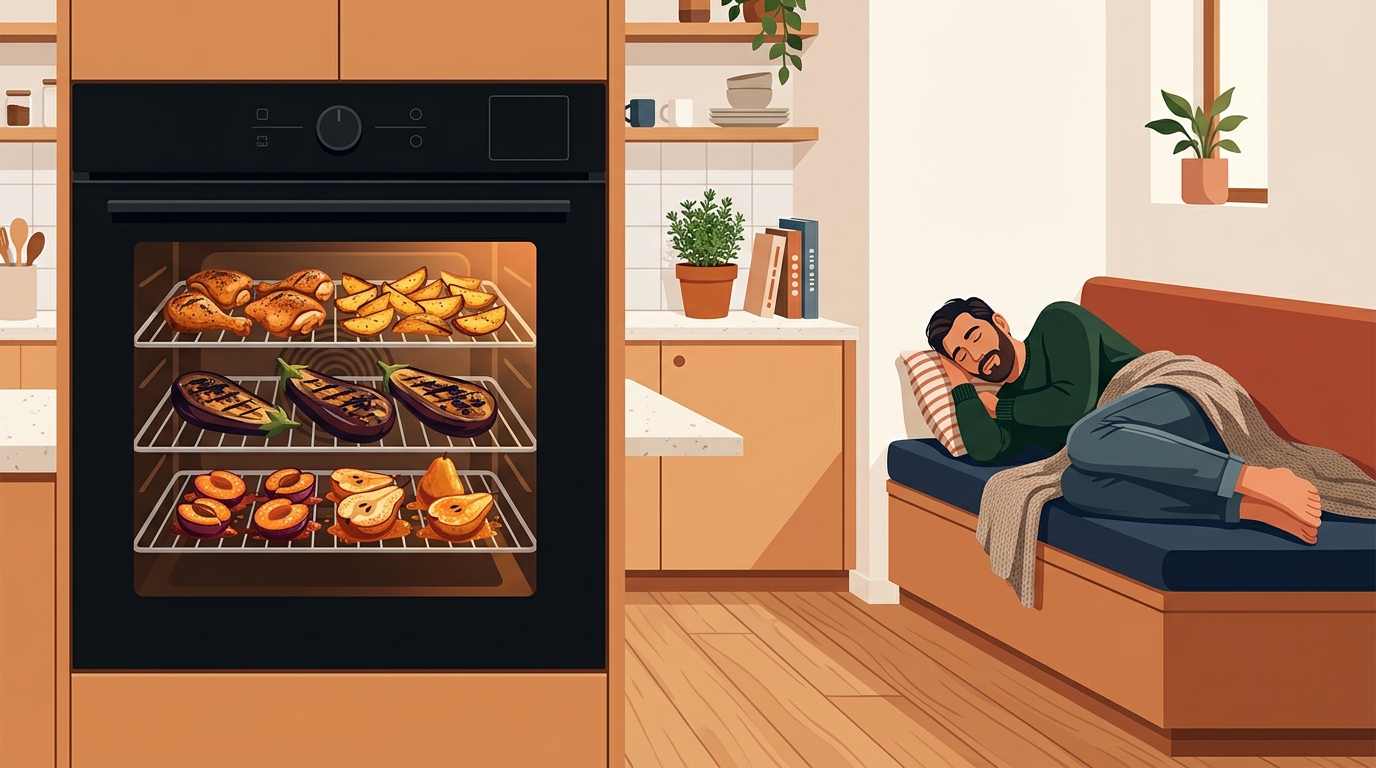
Hence the oven. When I make Everything I make everything in the oven. When I have to feed a big crowd, I feed the oven and the oven feeds the crowd. While the oven is busy making everything, I can find some time to prepare the next batch of everything. Or something. Or anything. Or take a nap. Throwing things into the oven and letting them be is very liberating, and it helps you deal with the perfectionistic side of you that wants all things to be just right.
Before you go on the “feed the oven” journey, you should invest in baking sheets. Usually your oven can handle 3–5 of them at the same time. Most people keep 1–2 at home. That’s a mistake that has the worst impact on your work-life balance. Buy the extra baking sheets and stuff that oven top to bottom every time.
Keep the temperature high, 200–220C. It will run cooler because of all the stuff in the oven, and sometimes you might rotate the baking sheets top to middle to bottom. That’s a good thing. Each of these rotations teaches you how your oven works, how convection works, whether your oven has hot spots you need to augment with even more rotations.
What kinds of everything go in the oven? Veggies. Fish. Meat. Bread. Pies. Fruit.
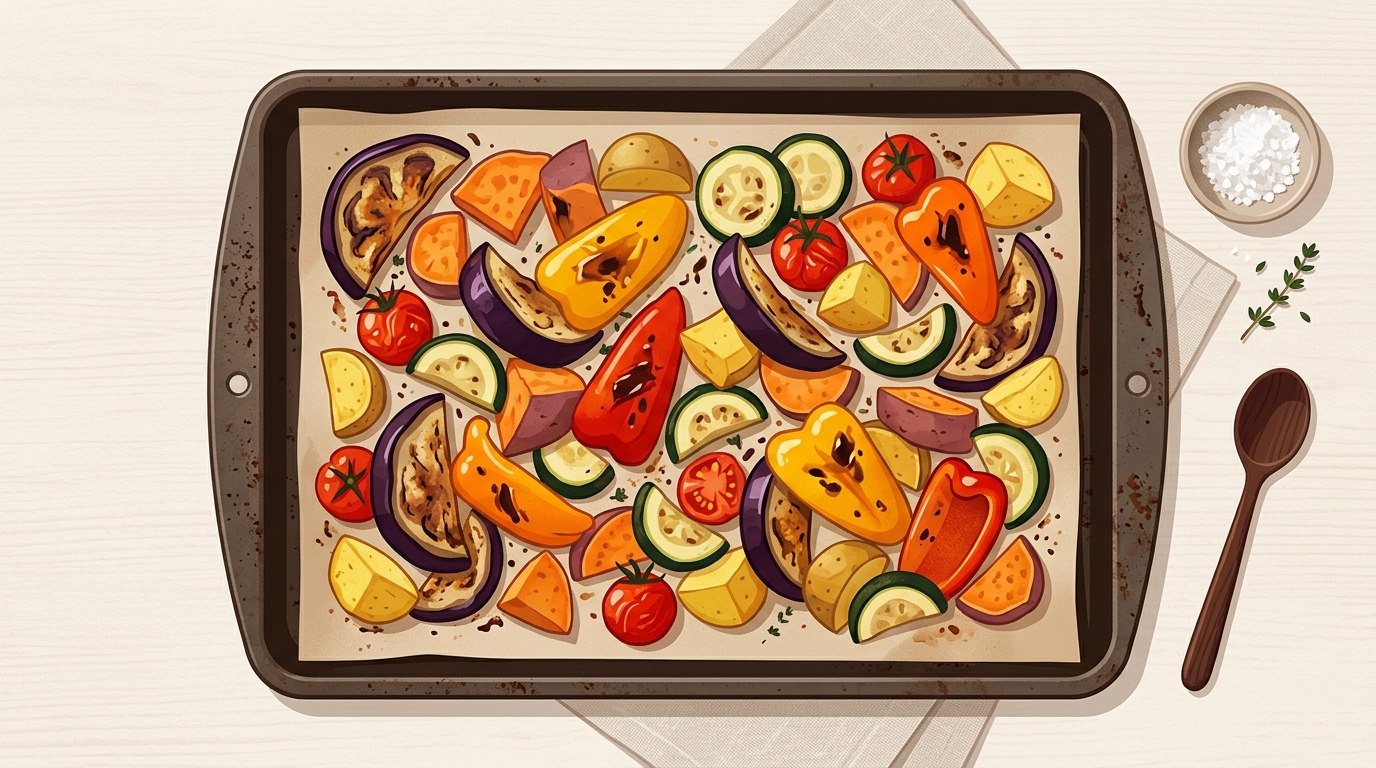
There are 3 main ways to pop veggies in the oven:
- Whole or halved, slightly salted on top: eggplants, squash, potatoes, beets wrapped in aluminum foil.
- Sliced into wedges or circles, drizzled with oil or mixed with spices and a little sauce, on top of parchment paper or aluminum foil to ease cleanup: any veggie, really. All of the above plus zucchini, bell peppers, hot peppers, garlic, sweet potato, artichokes, fennel, broccoli, carrots, cauliflower, tomato, and so on.
- Same as above, but paired with a chunk of protein that shares its juices and fat with the veggies as they climax together. Climaxing together is not optional. Choose the pairing and the chunk size wisely, so you don’t end up with the burnt out laying down by the side of the undercooked.
Fish fillets in a single layer should be watched very closely. They keep cooking after you take them out. 10 minutes are plenty. 20 are borderline sadistic. And try not to have fruit in the oven at the same time as fish.
Fruit in the oven is much better than fruit pie.
And finally: once the baking sheet is out of the oven but the guests are not there yet, the best thing you can do is use the same parchment paper that was lining the sheet to transfer what you baked into some other container or a serving plate… and use the freed-up baking sheet to make the next thing…
… until you’re done making Everything.