Something
I don’t cook recipes, and I think you should not either. Life is too long for recipes. Recipes don’t know you. They don’t know where you are coming from and where you are going, who you are with and what you want. They don’t know the spectrum of your abilities, the labyrinth of your constraints and the fireworks of your talents.
A recipe is a point. A Something is a spectrum. It bends when your life bends — three hours on a Sunday, forty minutes on a Tuesday, and both of them are still yours. You are not aiming at perfection. You are aiming at constrained exploration, which is a fancy way of saying: keep it, and let it change.
Pilaf, as we established, is dog food. What do you cook then? I don’t know, cook something. The internet, your library, your history, your heritage is full of options. How do you know you found a good option, then? I don’t know. It depends on who you are, who you’re with and what you want.
Who you are. Are you cooking every day or once in a while? Are you adventurous or traditional, ambitious or conservative, snob or people’s person? Are you trying to fit in or stand out?
Who you are with. Are you cooking for yourself, or are other people involved? Are you trying to make them happy, to make them appreciate the occasion of the next meal? What is the context? Who are the people? Are you trying to communicate that this meal is regular, or that it is special?
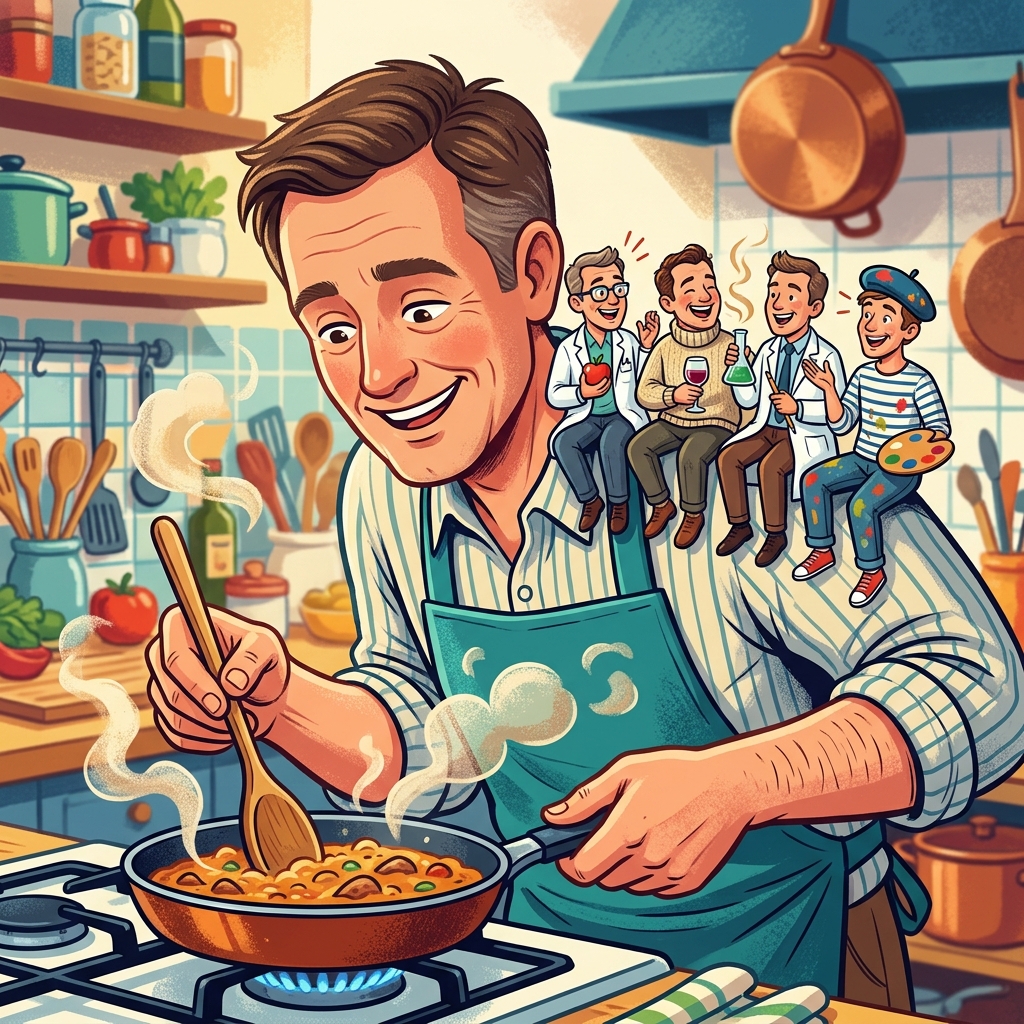
What you want. It’s impossible to want just one thing, but what is the ratio of your wants from the next meal? Are you planning to mostly listen to your inner nutritionist or your hedonist, your scientist or your artist, your political activist or your economist? Are you sticking to a particular diet and that’s front and center, or are you celebrating the beginning of asparagus season?
Nice questions. Some people might even find them overwhelming. Who has time for questions — the day is short and people are hungry. Well, I’ll tell you who does.
The one who remembers that all these lofty concepts — history, heritage, community, family, culture, friendship, priorities, values — are built from the very meals you make, around the table you choose to set on occasion. You build your relationships with people and with ideas around this table. You are welcome to skip the questions and just make whatever. It’s an option. We will still love you. But this is my chapter, and I didn’t call it “Whatever” for a reason.
When you choose to make a Something, you are doing a bit more than catering to your values and feeding your people. If you choose your Somethings well, making them will never be another sprint. It will be one of many beautiful marathons, and you will get the runner’s high while you are still planning and shopping for your next encounter with it.
For a Something to stick, it has to hit a few important points. It has to connect deeply with who you are: you should have history together, or want to make such history. It should be appreciated and celebrated by the people you share it with. And it should not raise too many eyebrows in your inner committee du jour — your nutritionist, your economist and your artist should not be allergic to the idea of making it.
Oh no I said too much. I haven’t said enough. Let’s get to examples.
Bigos
Why bigos is my Something
Remember sauerkraut? I make it, I have it in the fridge. It just lives there, and whenever it runs out I make more. Whenever I get to use some of it, I feel I have included it in my celebration and given it a prime time spot. It makes me feel good.
The people who celebrate with me are not surprised by my Slavic culinary tendencies. At the same time they are not Polish, so the dish doesn’t carry an association with a weeknight dinner.
And finally, my inner nutritionist is happy that the macros of this dish are a lot of meat and no dog food. My economist is happy that most of the time is bake time, so I get to do other things while it happens. My scientist is always curious how the drops of meat juices will caramelize on the layers of sauerkraut. And my artist is mesmerized by the look in people’s eyes when they smell the long fermentation fusing with the Maillard reaction, and start guessing what the wine pairing should be.
How to make bigos
Brown slow-cooking cuts of meat — beef shin or neck — in oil on all sides. Place the meat in a roaster on top of a shallow layer of sauerkraut. Sauté an onion in the remaining oil and beef juices. Add a bit of tomato paste. Deglaze the pan with hot water and sauerkraut juice, and pour it over the meat. Put more sauerkraut around the meat. Roast covered for 2–3 hours, low and slow. Take it out of the oven, let it rest for 20 minutes or so, slice the meat across the grain, remix it with the sauerkraut and return it to the oven for another 40 minutes.
How to make bigos burgers
Pre-roast a mix of sauerkraut and chopped fresh cabbage on a baking sheet for 20 minutes or so. Make beef patties and push them, while they are still raw, into the half-sour cabbage-sauerkraut mix. Flip and push into the mix again, so that a layer of cabbage works its way into the burgers.
Put the baking sheet into the oven for 20 minutes at high temperature (200C or so). Take it out and flip. The bottom layer of cabbage will have drunk up the beef juices, and once it’s facing the heat it caramelizes. Bake for another 20 minutes and serve.
Which brings us back to the spectrum. Once you know the basic recipe, the tastes of your audience and your own preferences, your goal is still not perfection. It’s constrained exploration. As you keep going, new constraints show up, and you creatively embrace them and make an iteration of your Something that fits inside them. If life gives you shorter time frames, you make bigos burgers.
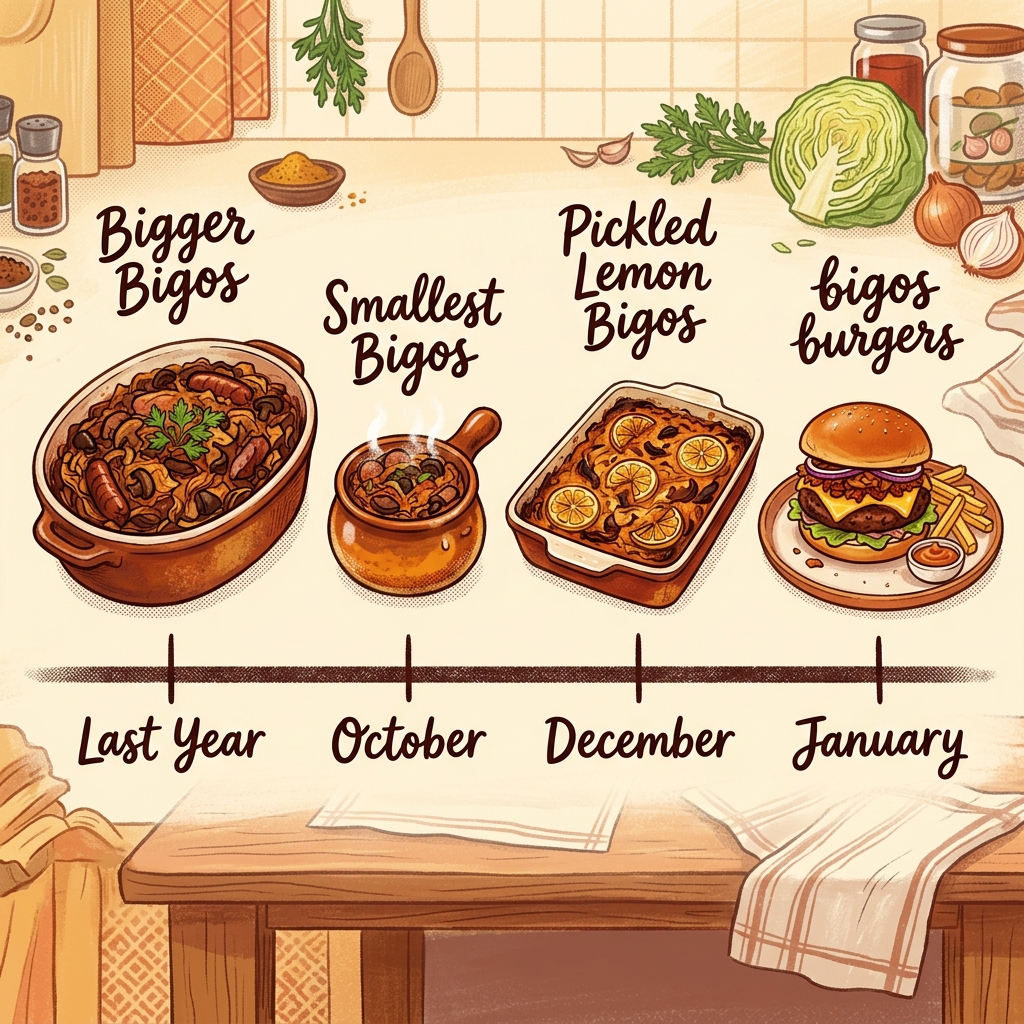
If life gives you lemons, you make lemon-kraut bigos.