Dog Food
( We are about to cross the Rubicon and burn the bridges. Drumroll. There was a safe way to name this chapter. I could have titled it “Pilaf”, kept all my friends, and told you close to nothing. But I chose to go all in and tell you the truth as I see it. You’ll choose if you still want to be my friend by the end of the chapter. )
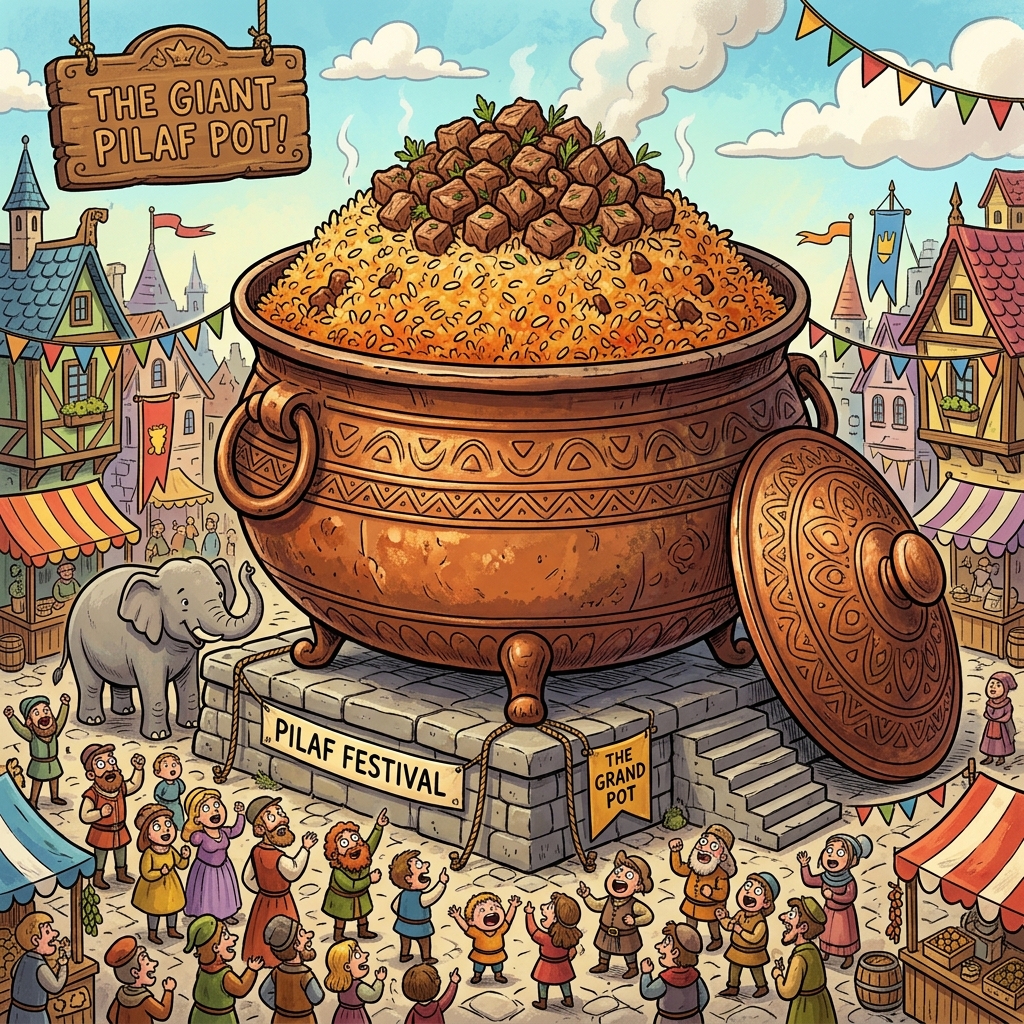
So many people love pilaf. So many nations pride themselves on being pilaf masters, cooking festive pilaf for thousands at weddings in cast iron pots the size of an elephant. How dare I put pilaf and dog food in the same sentence?
The size of the pot is the elephant in the room. Pilaf is a grain (often rice), sometimes a legume (like chickpea), onions, carrots, and some meat. People praise pilaf for its taste, smell, texture, color. But I want to focus on one quality: pilaf is frugal. It makes economic sense. When you make it, you are in full control of the ratios — and the ratios don’t favor meat. Everyone ends up liking it, no one ends up hungry. People deal with their health, exercise and nutrition outside of your thousand-person event. And you didn’t break the bank. Win-win. When you cook for a crowd and you want to keep most of your money, you make a pilaf. Get into the habit and you make pilaf for yourself too, and deal with diet and nutrition outside of pilaf. When you’re too lazy to cook, you get chicken and veggies over rice from the closest ethnic restaurant and it’s yummy. The only catch: if you eat the whole portion, or split it into two or three sub-portions, you’ll have to augment it with enough meat to hit your macros.
However, if you own a dog, the story changes. Reheat the meat, and with it just enough rice to fit your macros. Eat your portion. What’s left in the pot — most of the rice, soaked in the fat that ran off the meat — is excellent dog food. You spoon a little over your dog’s bowl and he loves you forever. He already does.
If I only cared about my own macros, I’d cook the meat so there were no leftovers at all. But I throw the grain into the pot on purpose. The fat renders off the meat and into the rice — so I never have to skim it, my portion comes out lighter, and the rice carries every bit of that meat taste straight to the dog. For him, a bowl with even a trace of my food is the holy grail. Everybody wins.
Here’s the part where you decide if we’re still friends.
We are the dogs of the food industry. What lands on our plate is an afterthought. Once they’ve figured out what’s cheap, and what looks and smells and tastes yummy, they draw the line — and hand us a bowl of dog food with a topper. The only question is who draws the line. When they cook, they draw it. When you cook, you do. That’s the whole chapter.
Pilaf
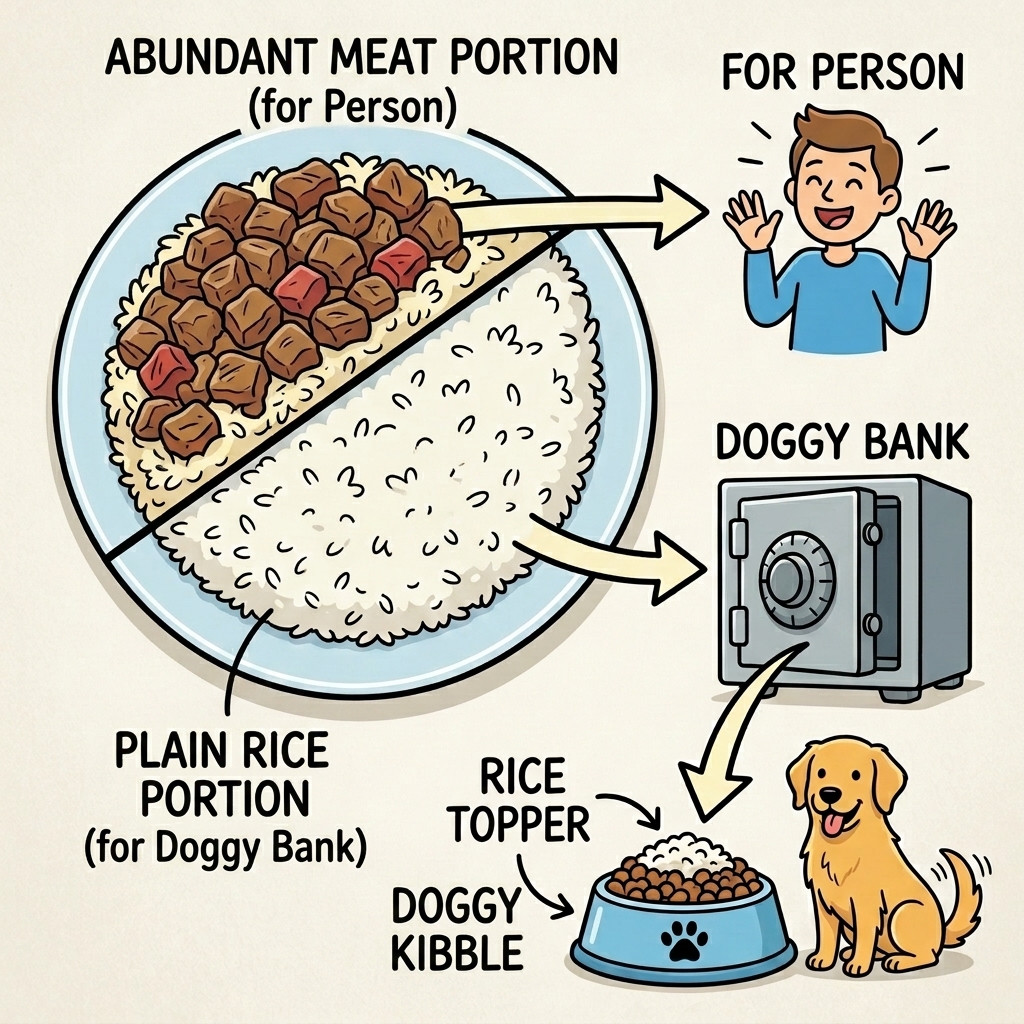
Cook your thing → Draw the line → Take your share → Feed the dog.
Brown 3–4 lamb shanks, or 6–8 chicken drumsticks, or an equal amount of whatever meat you like, in oil with some salt and pepper. Meanwhile, cut up an onion and a couple of carrots. When the meat is almost browned, throw in the onion and carrots. Resist the temptation to add more oil. Once the onions go transparent and even slightly caramelized, add a couple of cups of water. Boil under cover for an hour or two, depending on the meat. Add a grain of your choice and enough boiling water for the grain to drink up. Here’s a secret: if the ratio isn’t the perfect 1 cup grain : 2 cups water, the grain will drink it up anyway. It’s just a matter of time.
Here’s another secret: the grain is the dial. The more you add, the more special human food ends up in the dog’s bowl; the less you add, the less he gets. No need to measure cups of anything — just decide where to draw the line, and let the dog be happy with whatever lands on his side. He has his own dog food anyway.
We taught you to shop. We taught you to wait. And now we’ve taught you to draw the line. Just like you don’t have to eat everything, you don’t have to cook everything every time for everyone. Being a person is a full-time job, and sometimes you take a break by making — or eating — dog food. We’ll still love you.